

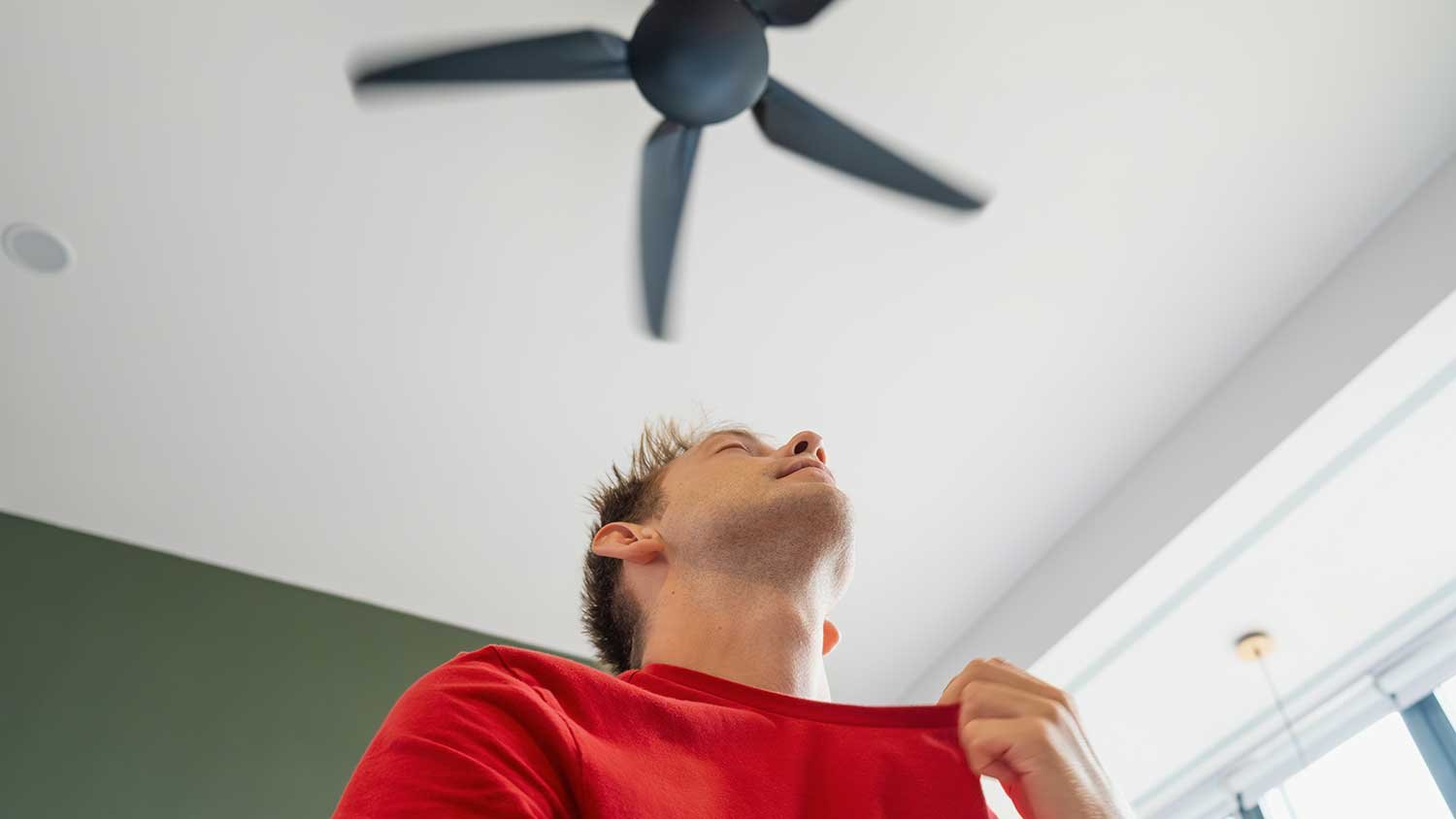
Why Traditional Ceiling Fans Don’t Actually Solve Uneven Temperatures
For decades, ceiling fans have been one of the most common ways homeowners try to improve comfort indoors. If a room feels stuffy or warm, the instinct is simple: turn the fan on.
And while traditional ceiling fans can make a room feel cooler, they often don’t solve the bigger issue many homeowners are actually dealing with: Uneven temperatures throughout the home. If some rooms still feel too warm, too cold, or drafty even with ceiling fans running, there’s a reason for that—and it comes down to how air actually moves indoors.
What Traditional Ceiling Fans Are Designed to Do
Most ceiling fans are built to create a wind chill effect. By moving air horizontally across your skin, they help sweat evaporate faster, making you feel cooler in the summer. This works well when you’re sitting directly beneath the fan, especially in smaller spaces.
But that airflow is designed for personal cooling sensation—not whole-room temperature balancing. That’s an important difference.
Why Uneven Temperatures Still Happen
Even with ceiling fans running, homes naturally develop layers of temperature. Warm air rises. Cooler air sinks. Over time, this creates what’s known as thermal stratification:
- Warm air collects near the ceiling
- Cooler air settles lower in the room
- Different floors and rooms develop different temperatures
This becomes even more noticeable in:
- Open-concept homes
- Rooms with vaulted ceilings
- Multi-story homes
- Garages and basements
Traditional ceiling fans may move air around the room, but they often don’t fully mix these temperature layers.
That’s why you can still end up with:
- Cold floors
- Warm upstairs rooms
- Uneven comfort between spaces
- HVAC systems running longer than necessary
The Difference Between Air Movement and Air Circulation
This is where many homeowners get confused. Not all airflow works the same way.
Traditional Ceiling Fans
Most standard ceiling fans push air outward across the room. Their primary goal is to create a breeze.
Destratification Fans
Destratification systems are engineered to move air vertically—from ceiling to floor—so the entire room stays more evenly balanced.
Instead of creating a cooling sensation on your skin, destratification continuously mixes the full air column within the space. That distinction matters because balanced air circulation helps:
- Eliminate hot and cold layers
- Improve comfort throughout the room
- Reduce stagnant air zones
- Support more efficient heating and cooling
If you’ve noticed different temperatures throughout your home, you can also read more about why some rooms feel warmer or colder than others.
Why This Matters for Energy Efficiency
When warm air stays trapped near the ceiling, your HVAC system has to work harder to maintain comfortable temperatures where people actually live. That often leads to:
- Higher heating and cooling bills
- Constant thermostat adjustments
- Rooms that never quite feel comfortable
Better circulation helps conditioned air reach the occupied space more effectively, reducing the strain on your HVAC system and improving overall comfort.
How Airius Approaches Home Airflow Differently
Airius Fans are designed specifically to solve airflow imbalance in residential spaces. Rather than simply creating a breeze, our fans continuously circulate air vertically through the entire room—helping eliminate temperature layering from floor to ceiling. This creates:
- More even temperatures throughout the home
- Better comfort across multiple rooms and levels
- Improved airflow in open spaces
- More efficient use of heated and cooled air
And because all fans operates quietly and continuously, it improves comfort without creating the constant draft sensation many homeowners associate with traditional ceiling fans. Explore Our Fans and discover a smarter approach to home airflow.
Better Comfort Starts with Better Circulation
Traditional ceiling fans still have their place. But when it comes to solving uneven temperatures, improving airflow efficiency, and balancing comfort throughout your home, moving air differently matters.
Because true comfort isn’t about creating more breeze—it’s about creating better balance.